Habitat: Along the east coast of Australia from Cape York (QLD) to south-western Victoria, in coastal heath, rainforest, woodland and dense bushland near creeks
Scientific name: Wallabia bicolour
Other common names: Black Wallaby, Black-tailed wallaby, Fern wallaby
Size: Between 65 to 85cm tall and weighing up to 15kg
Conservation status: Listed as Least Concern under the International Union for Conservation of Nature (IUCN)
About
Swamp wallabies are medium-sized macropods (the kangaroo-and-wallaby family), which are a form of marsupial with large hind legs, feet and tail. Adults are typically around 65–85 cm tall, with dark brown to black fur and rusty, orange tones on the belly, chest, and around the base of the ears. A pale stripe on the face is a common field mark.
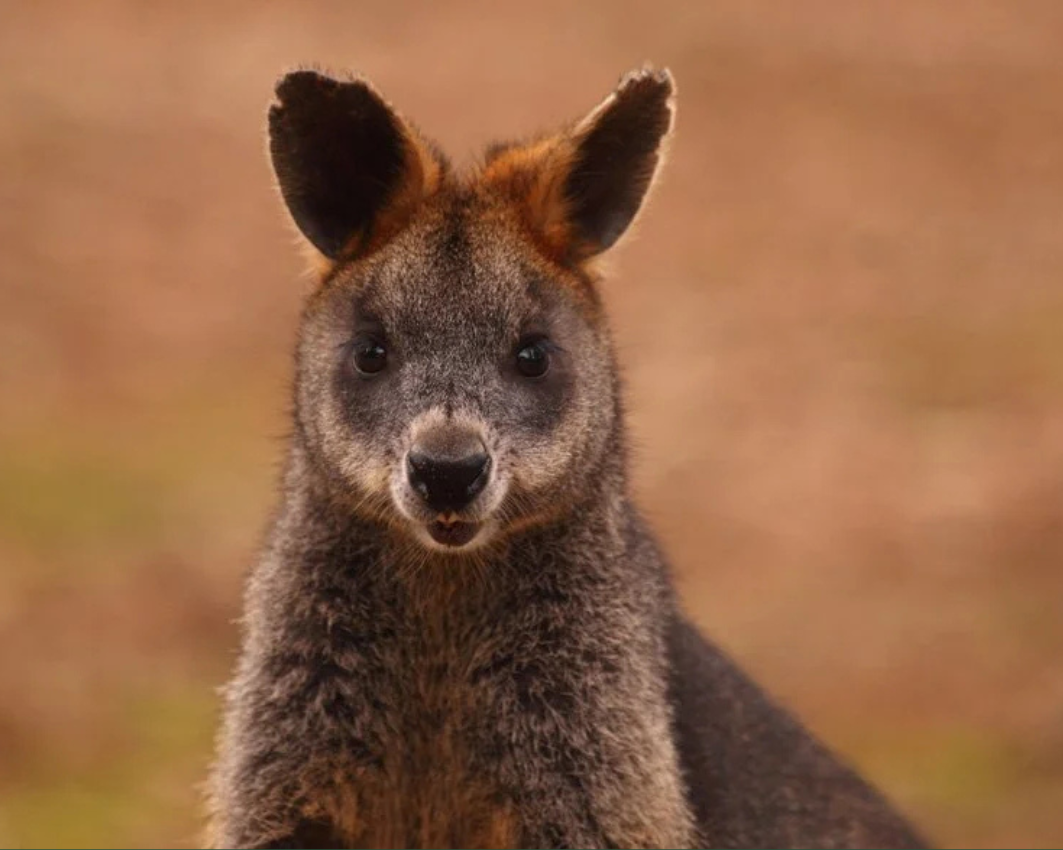
Swamp wallaby (Wallabia bicolour). Image: Chris Watson
Despite the name, they aren’t limited to swamps. The "swamp" label reflects their association with dense, often wet or shrubby habitats, not an exclusive dependence on wetlands.
Diet
Unlike many macropods that are famous grass-grazers, the swamp wallaby is a flexible herbivore that eats a broad mix of plant material such as grasses, ferns, shrubs and leaves, often depending on what’s locally available. Swamp wallabies have a fourth premolar tooth, which, unlike other mammals, is not shed. This tooth allows them to grind coarse plant fibre down, so it is easier to digest.
This flexible feeding is part of why the species can occupy many vegetation types along the east coast, from wet forests to heath and woodland, provided there’s adequate shelter and food.
Swamp wallabies help decompose the vegetation and make healthy soils for native plants. Their faeces provide nutrients for the soil and help spread seeds and other fungal spores. Their grazing also helps prune the low-lying vegetation.
Fun fact: If you see something that looks like a small kangaroo, on its own and in more bushy areas, it’s more likely to be a wallaby!
Behaviour
Swamp wallabies have one of the most extraordinary reproductive strategies documented in mammals. Their gestation is around 35 days, and typically a single tiny joey (around a gram at birth) makes its way to the pouch, where it remains for about 8–9 months, with weaning occurring much later (around 15 months). What’s truly unusual is that females can ovulate, mate, and form a new embryo before giving birth — while still carrying a near-term fetus in the other uterus. The new embryo then pauses in development (embryonic diapause) until conditions are right.
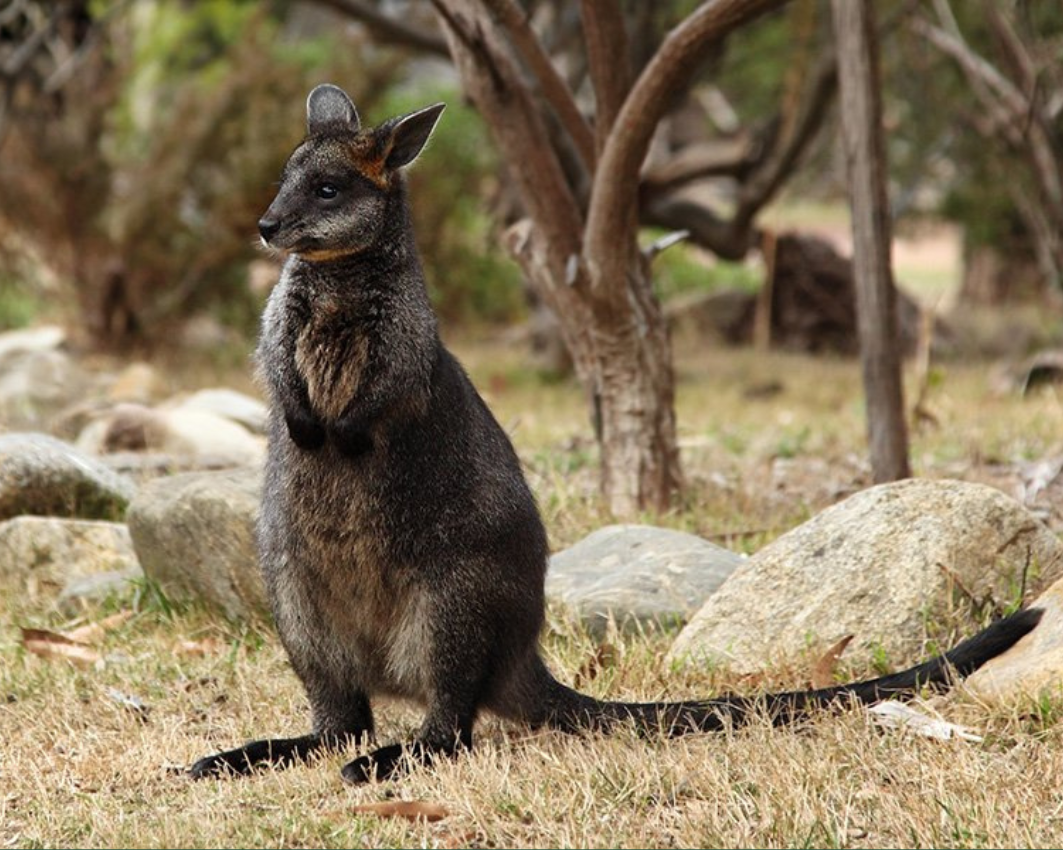
Image: Wikimedia
In practical terms, this can allow overlap of dependent young at different stages (for example, different-aged young supported via lactation), and it’s why swamp wallabies have been described as being able to blur the usual "one pregnancy at a time" pattern seen in most mammals.
Swamp wallabies also have an unusual gait, which causes them to carry their head low and their tail straight. This behaviour, combined with the species’ dark, sometimes black, coat, may have resulted in the "panther sightings" along the east coast of Australia!