Accelerating Natural Rainforest Recovery
At Gondwana Rainforest Trust, successful rainforest restoration requires understanding how to work with natural regeneration processes while systematically removing barriers that prevent forest recovery.
Our restoration model integrates strategic weed control with Assisted Natural Regeneration (ANR), creating an evidence-based approach that maximises ecological outcomes while optimising cost-effectiveness.
Invasive Species Impacts on Rainforest Restoration
Invasive weeds present significant barriers to rainforest restoration through multiple ecological mechanisms:
- Competition for light: Fast-growing invasive species such as Lantana Camara and Singapore Daisy (Sphagneticola Trilobata) out-shade native seedlings during critical establishment phases
- Altered soil conditions: Exotic grasses modify soil moisture regimes, nutrient cycling, and microbial communities, creating conditions unsuitable for rainforest species establishment
- Fire regime modification: Invasive grasses create ladder fuels that increase fire risk in fire-sensitive rainforest margins
- Habitat fragmentation: Dense invasive thickets impede fauna movement through wildlife corridors
Strategic weed control during early restoration phases significantly improves native species establishment success while reducing long-term maintenance requirements.
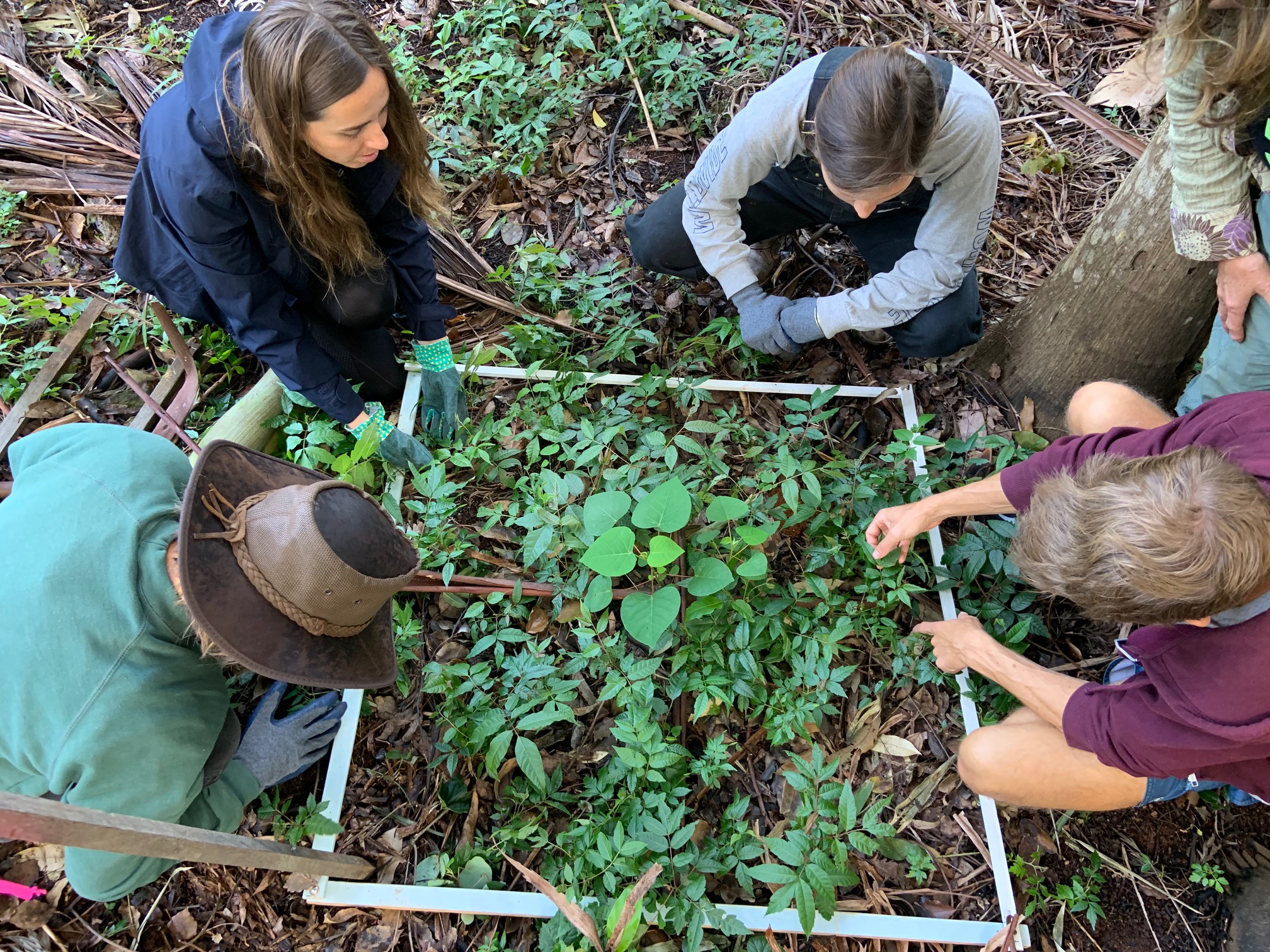 Measuring progress of Assisted Natural Regeneration.
Our Five-Stage Restoration Process
Stage 1: Site Assessment and Baseline Data Collection
Restoration planning begins with comprehensive site characterisation, including vegetation surveys, soil analysis, hydrological assessment, and invasive species mapping using GPS/GIS technology. We identify existing native regeneration patches and establish treatment priorities based on weed density and ecological significance.
Stage 2: Targeted Invasive Species Control
We employ mechanical removal, selective herbicide application by licensed contractors, and staged control methods to minimise soil disturbance and erosion risk. Treatment strategies are site-specific and designed to create optimal conditions for native species establishment.
Stage 3: Let Nature Lead Where Possible
This is where Assisted Natural Regeneration shines. Where we find native seedlings emerging from the soil seed bank or spreading from nearby forest edges, we prioritise supporting these natural recruits over heavy planting. We clear small patches around native seedlings to give them light and space, then use tree guards or brush mulch to suppress weed regrowth.
Stage 4: Fill the Gaps
Where natural regeneration isn't sufficient, we strategically plant locally-sourced native species—focusing on keystone food trees, structural species, and fast-growing canopy formers that will quickly create rainforest conditions.
Stage 5: Adaptive Management and Monitoring
Follow-up interventions occur at 3, 6, 12, and 24-month intervals based on site-specific requirements. We monitor canopy closure progression, as shade levels above 70% typically result in natural suppression of light-demanding invasive species.
Canopy Development as Long-term Weed Suppression
Establishing forest canopy represents one of the most cost-effective long-term invasive species management strategies in rainforest restoration.
Ecological Mechanism:
- Initial invasive species dominance occurs in high-light environments
- Restoration interventions suppress weeds and establish fast-growing native species
- Canopy development increases shade and leaf litter accumulation
- Light reduction and litter layer suppress germination of light-demanding invasive species
- Improved soil moisture and organic matter enhance native species recruitment
This positive feedback loop results in declining maintenance requirements while increasing ecosystem function and biodiversity.
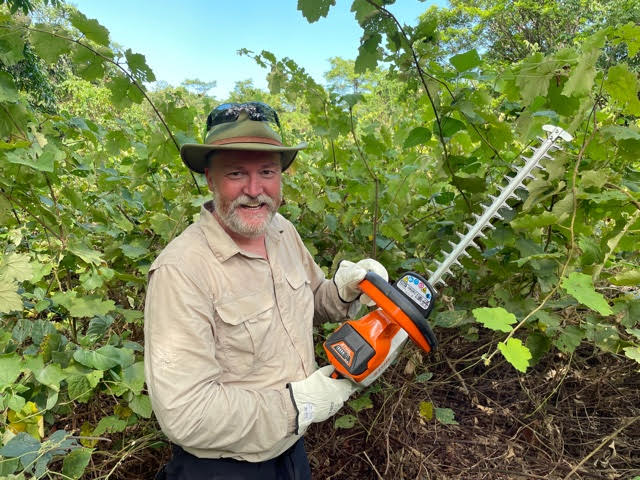 Removing invasive weed Giant Brambles in the Daintree
When Assisted Natural Regeneration Works Best
ANR is particularly effective when:
- There's nearby intact rainforest supplying seeds via wind, water, and animals
- The soil seed bank remains intact under pasture grass
- Disturbance history is moderate rather than severe
Our typical ANR treatments include:
- Strategic pasture removal in strips, leaving recruitment zones
- "Skylighting"—removing weeds above native saplings to give them room to grow
- Careful removal of invasive trees while retaining habitat structure
- Exclusion fencing where cattle pressure continues
The benefits are significant: lower cost per hectare, higher genetic diversity from local seed sources, quicker wildlife use, and approaches that align with traditional land management practices.
Partnerships that Power Restoration Success
Our restoration work succeeds through collaborative partnerships that bring together Traditional Owner knowledge, scientific expertise, community engagement, and regulatory oversight.
Working with Traditional Owners
Jabalbina Yalanji Aboriginal Corporation provides on-Country leadership in the Daintree, with Traditional Owner rangers conducting joint weed sweeps and cultural site protection prior to land transfer to Daintree National Park. These collaborations ensure our methods align with cultural values and incorporate Traditional knowledge:
- Protecting culturally significant plants during weed removal
- Timing work to avoid important cultural seasons
- Providing training and employment for Traditional Owner ranger groups
- Incorporating cultural burning knowledge at forest margins where appropriate
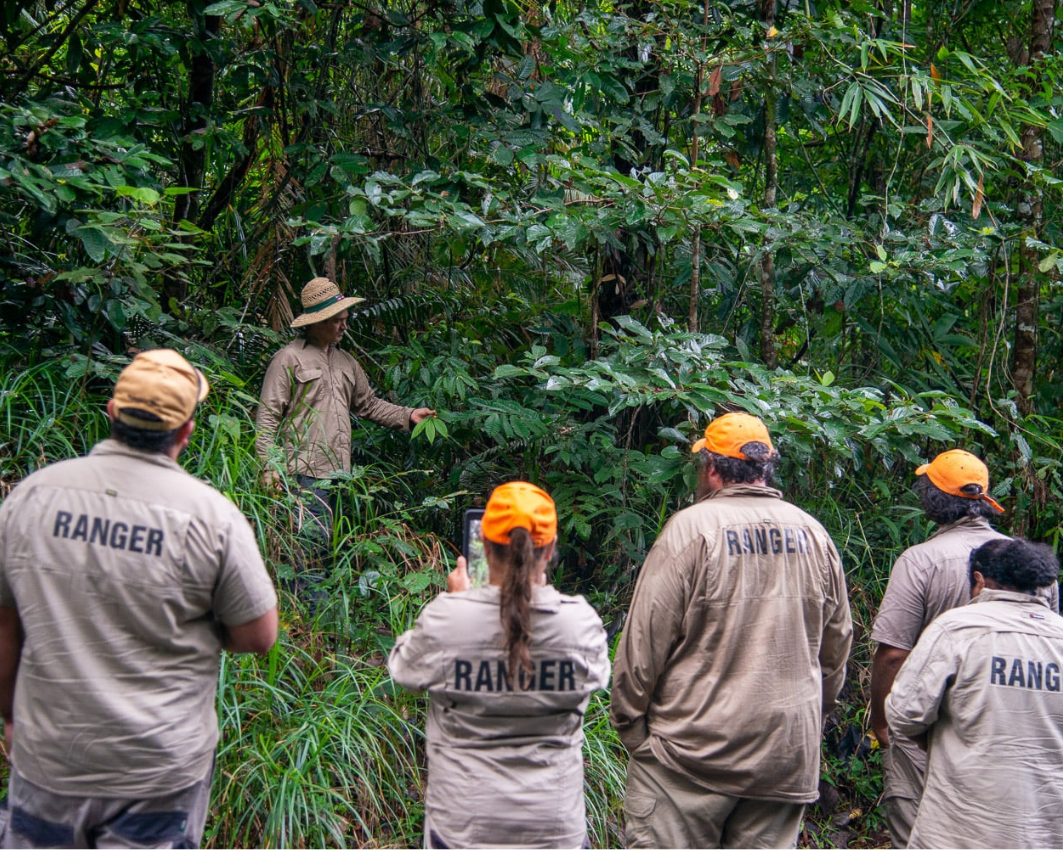
Jabalbina Rangers on site in the Daintree.
Community Engagement Through Rainforest Rangers
Our Rainforest Rangers program mobilises community volunteers for critical restoration work. Volunteers participate in planting events and follow-up maintenance, including weed release around planted seedlings. This community involvement not only provides essential labor but builds local connection to restoration outcomes.
Government and Technical Partnerships
We work closely with the Wet Tropics Management Authority, Queensland Parks and Wildlife Service, and Department of Environment and Science Queensland for technical guidance, biodiversity target setting, and regulatory compliance. These agencies provide pre-transfer weed inspection and sign-off for properties joining Daintree National Park, ensuring restoration meets conservation standards.
Integrated Partnership Approach
As the lead organisation, Gondwana Rainforest Trust coordinates site acquisition, project planning, and funding while integrating ANR strategies into property management plans. This collaborative model ensures restoration projects benefit from diverse expertise while maintaining consistent conservation objectives across all sites.
Measuring Success
We track restoration progress through multiple indicators:
Short-term (0-18 months):
- Percentage reduction in weed cover
- Survival rates of planted seedlings
- Native recruitment in ANR zones
Medium-term (18-48 months):
- Canopy closure and height growth
- Soil moisture and litter depth recovery
- Weed re-invasion rates
Long-term (4+ years):
- Native species diversity compared to reference forests
- Presence of shade-tolerant seedlings and epiphytes
- Wildlife usage through bird surveys and camera traps
Success Story: Jarretts Road, Northern NSW
Our restoration work at Jarretts Road demonstrates this integrated approach in action. What began as compacted cattle paddock with heavy pasture grass is now thriving forest:
- 2020: 6,000 locally-sourced native trees planted with community volunteers
- Ongoing: Regular weed release around seedlings during establishment
- Year 3-4 results: Canopy trees over 6 meters high, natural shade suppressing weeds, improved soil structure, and frugivorous birds bringing in additional seeds
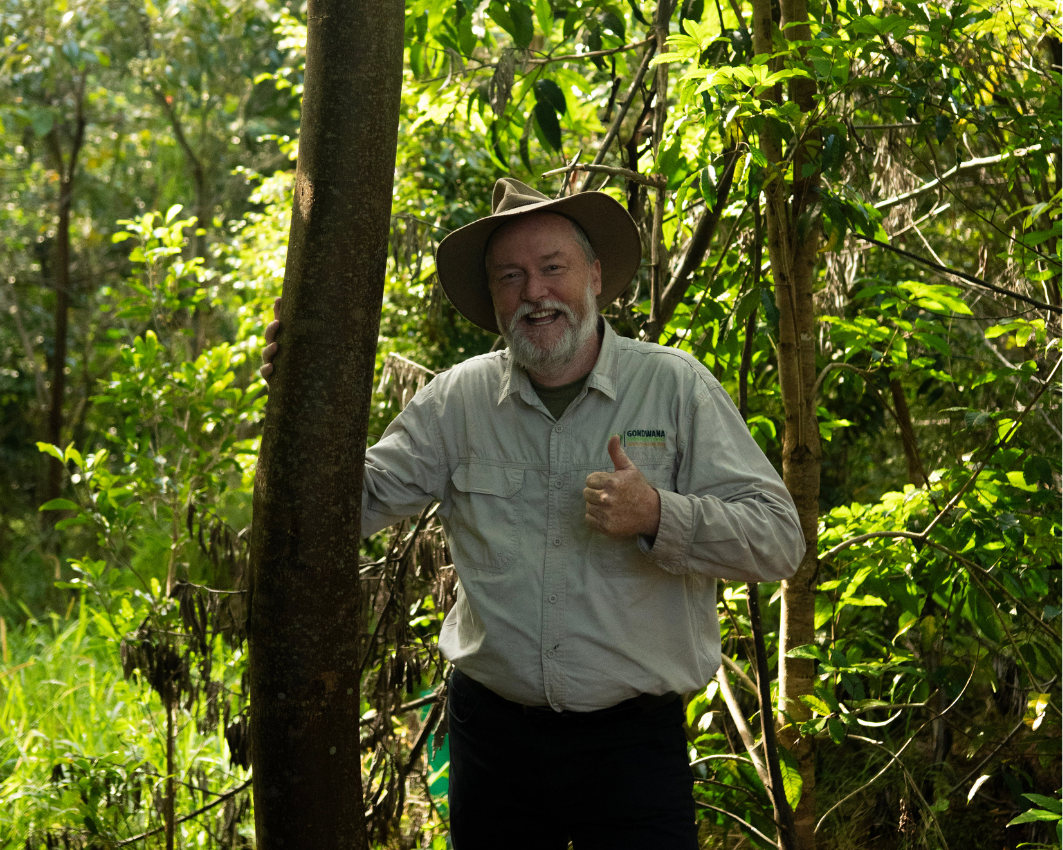 Checking out progress of a regeneration project in Goonengerry, Northern NSW.
The Bigger Picture
This integrated approach to weed control and natural regeneration represents a fundamental shift in restoration thinking. Instead of fighting against ecological processes, we're learning to work with them—removing barriers, providing strategic support, and then stepping back to let forests heal themselves.
The result is restoration that's not only more cost-effective but creates more resilient, biodiverse forests that can sustain themselves long into the future. It's proof that sometimes the best way to help nature is to understand how to get out of its way.
Want to get involved in rainforest restoration? Join one of our community planting days or volunteer for ongoing maintenance work. Together, we're not just establishing trees—we're rebuilding ecosystems. Get involved here.