Science-Based Restoration: Natural Regeneration in the Daintree Rainforest.
With our Rainforest Rangers program a commitment to science-based ecological restoration is driving everything we do. From experience we've learnt that observing natural processes and measuring our impact creates the most effective conservation outcomes. Our three-year natural regeneration trial at Lot 11 Buchanan Creek Road in the Daintree Rainforest perfectly demonstrates this approach in action.
From Acquisition to Restoration
Purchased in 2022 through our Save the Daintree program, Lot 11 Buchanan Creek Road in Cow Bay shares boundaries on three sides with Daintree National Park. However, it faced a significant challenge—a previous owner had cleared 4,000 square metres of the rainforest, allowing an exotic species, Giant Bramble, to invade and dominate the site.
This property provides critical habitat for the endangered Southern Cassowary and is home to three threatened plant species - China Camp Laurel, Gray's Walnut, and Noah's Walnut. Two vulnerable frog species also inhabit streams within 50 metres of the property. Removing environmental weeds and restoring habitat will help with the long-term survival of these Threatened species.
Owing to the sites proximity to expansive tracts of rainforest we anticipated that Assisted Natural Regeneration would play an important role in the rehabilitation of Lot 11.
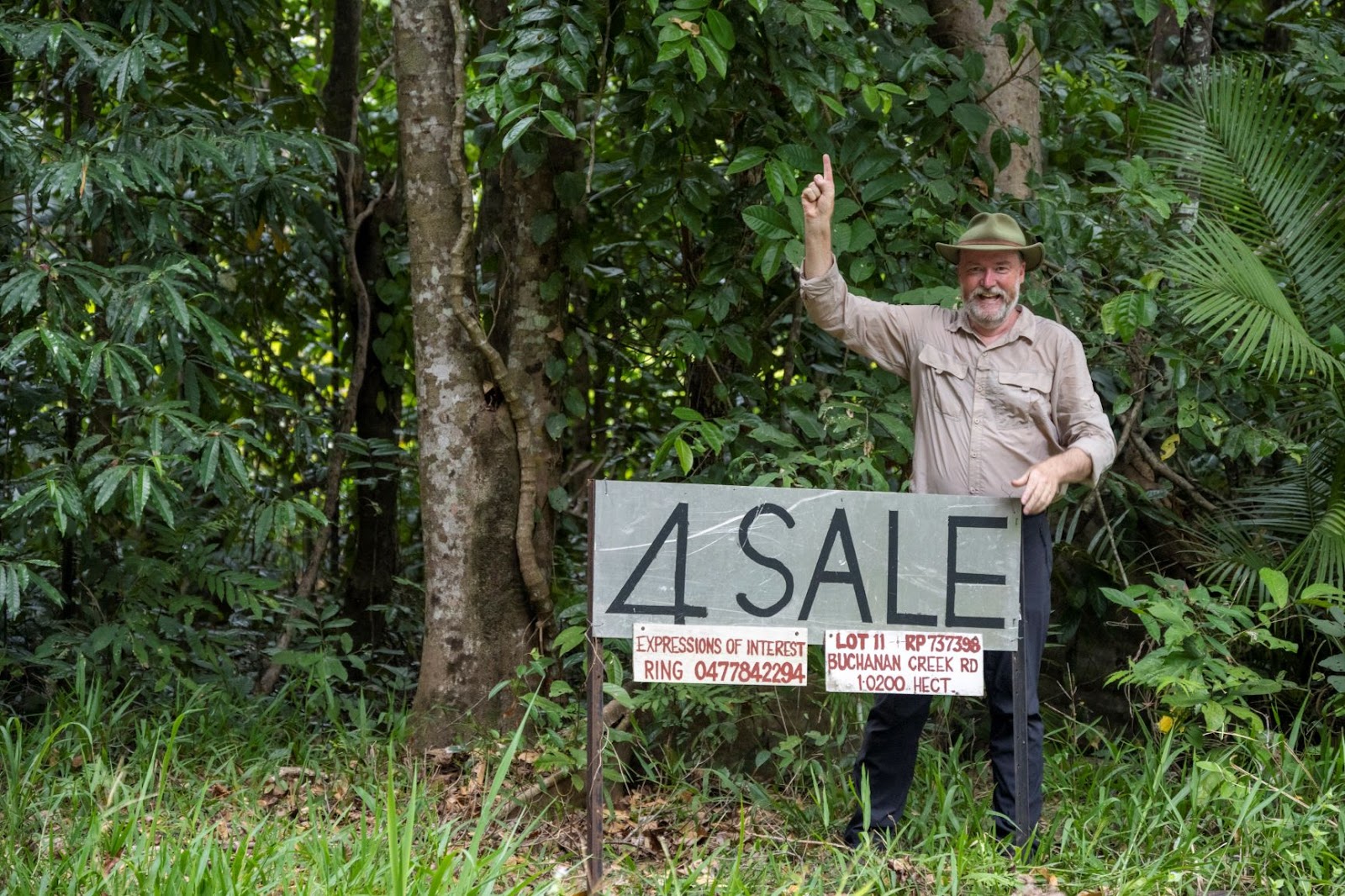
Our Founder, Kelvin Davies at Lot 11 Buchanan Creek Road.
Testing Assisted Natural Regeneration
Rather than simply planting trees, we tested whether, with some help, the rainforest could grow back. This is a technique known as Assisted Natural Regeneration (ANR) and it involves restoring ecosystems by working with natural processes. After completing the removal of Giant Bramble in April 2022 we stepped back to let nature take the lead. Seeds of rainforest plants already in the soil were able to germinate and others were introduced by birds, bats and the wind.
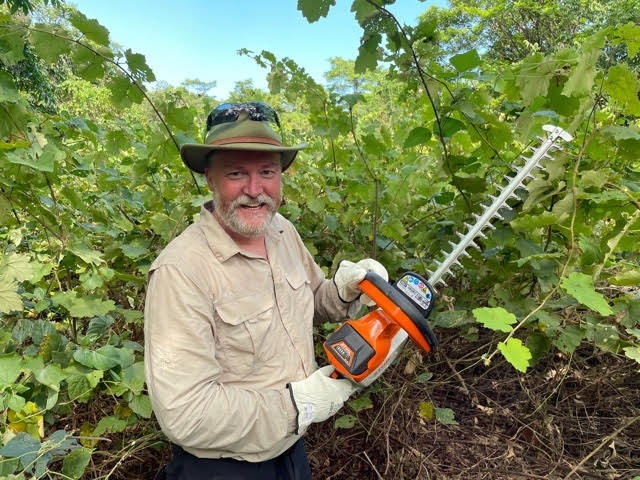
Before: Giant Brambles covered the site.
Remarkable Results
In August 2024, botanist and ecologist Kristopher Kupsch assessed our trial site. This was compared to the baseline survey undertaken in March 2021 in which the majority of the site was then dominated by Giant Bramble (Rubus alceifolius).
The results: approximately 11,000 naturally recruiting native plants across the restoration area—validating our prediction that natural regeneration would succeed with minimal intervention.
Mass germination of pioneer species was observed, this is common and only a smaller number will persist to maturity. Overtime this abundance diminishes as natural thinning occurs due to shading and succession however the domination by these pioneer species has lead to site capture by shading out grasses and other weeds. This has greatly reduced the need for labour intensive and costly weed control.
The area exposed to trampling (thoroughfares) and direct sun experienced less recruitment than those sheltered under driplines of other trees or positioned in seasonal shading. The clay soil in this location is easily compacted under trampling or previous land uses.
The assessment revealed that success varied dramatically across microclimates. Shadier sites with seasonal protection showed significantly higher recruitment, with some specimens reaching 2-5 metres in just two years.
Where germination was less successful, we undertook direct sowing of large-fruited native species by collecting fruits of rainforest species in the adjoining forest and pushing them into the ground. Direct sowing of Cassowary Plum (Cerbera floribunda), Black Palm (Normanbya normanbyi), Noah’s Walnut (Endiandra microneura) and Black Bean (Castanospermum australe) was shown to have good results when sown partially or below the surface rather than dropped atop the soil. All exposed to high levels of sun failed to succeed whilst those in sheltered sites have grown up to half a metre tall in 2 years.
A small number of trees were planted as a community engagement activity (approximately 200).
Most encouragingly, Cassowaries have returned to the regenerating rainforest, demonstrating successful habitat restoration for this keystone species.
The main activity of the last three years has been monitoring the site and the removal of competing weeds, mostly grasses.
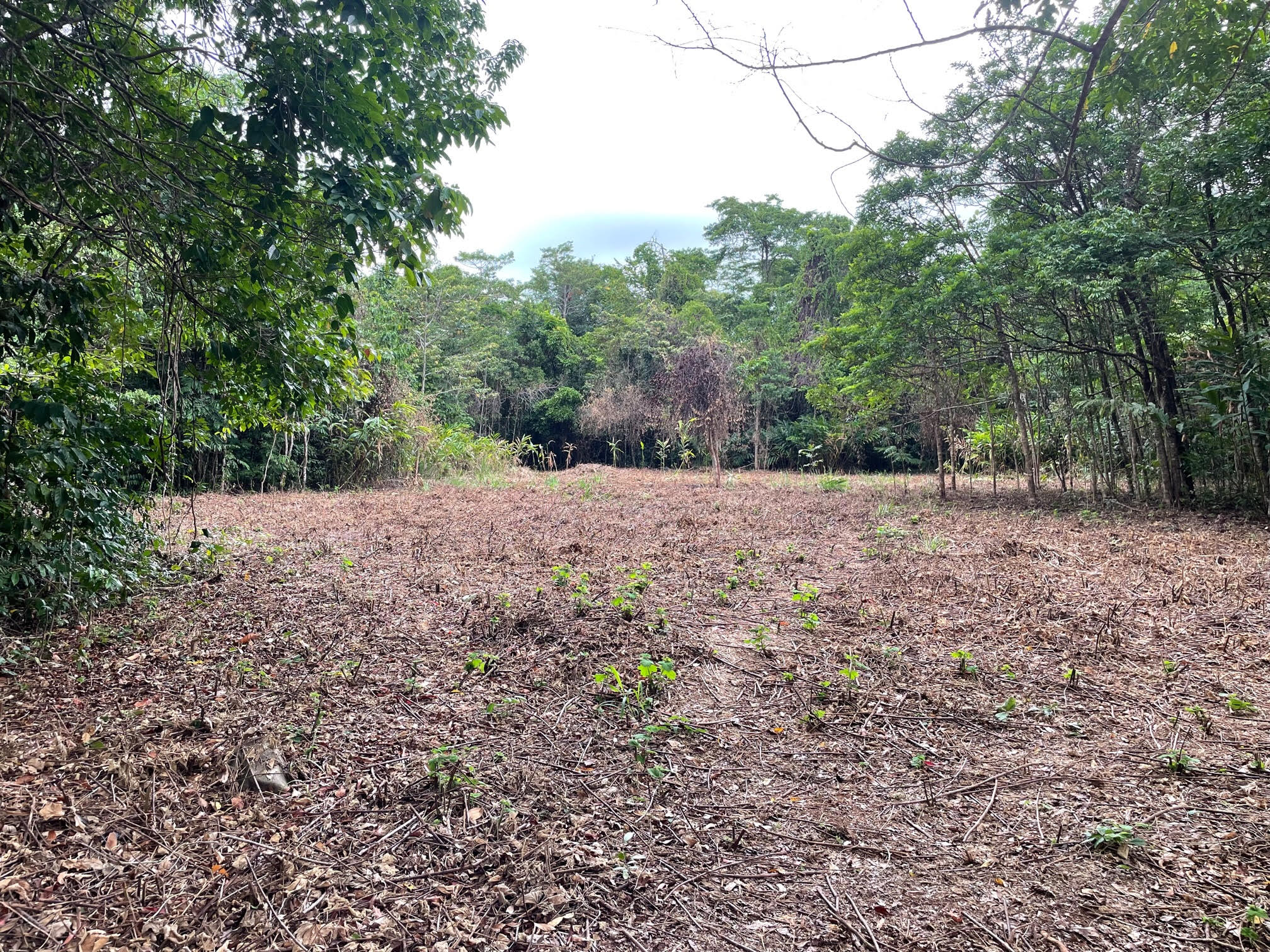
Stage 1, Giant Brambles removed from 4,000 square metres.
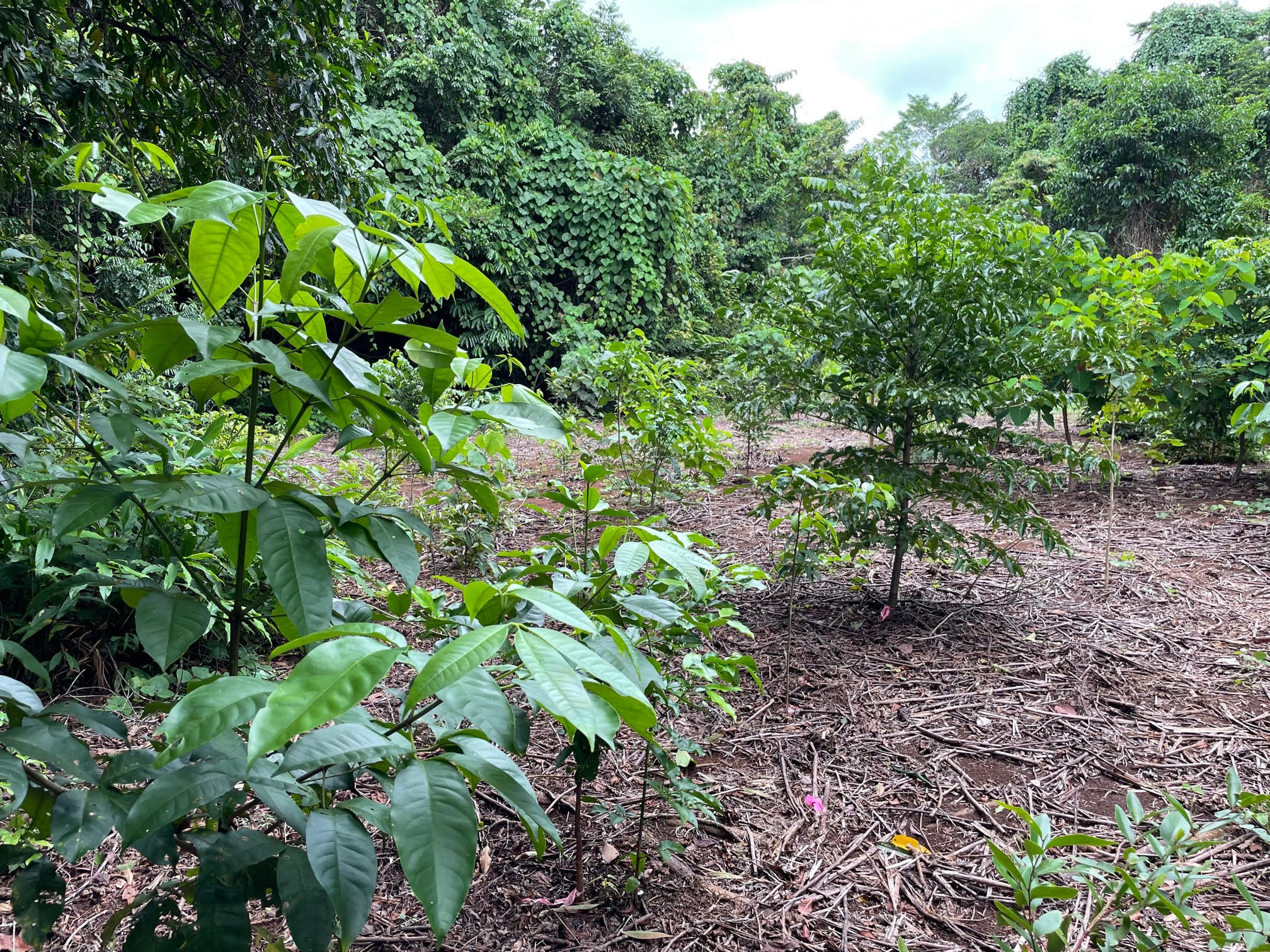
With some help, the rainforest at Lot 11 is growing back.
Science Informing Conservation
This trial proves that where conditions are suitable, Assisted Natural Regeneration can achieve superior ecological outcomes while being more cost-effective than traditional planting.
We're not just restoring rainforest—we're rebuilding the intricate relationships between threatened species like Noah's Walnut and the Cassowaries that disperse their seeds.
Not many of the 34 Daintree Rainforest properties we've purchased have required restoration of this scale, making Lot 11 an exceptional case study informing our conservation approach. As we assess the need for restoration on other properties in the Daintree Rainforest, the first question we will ask is how much tree planting is necessary and how likely it is that the rainforest will regrow simply with some helping hands.
. . . . .
Rainforest Rangers is a program of Gondwana Rainforest Trust.